




Refurbished enterprise IT should cost less. That only works if pricing actually tracks what's happening in the market - not what happened six months ago.
At Intelligent Servers, pricing across servers, storage, networking and components gets reviewed regularly. Not occasionally. Regularly. The goal: make sure what you see on the site reflects current market conditions, so you're not paying yesterday's prices for today's hardware.
We track what's actually selling
Refurbished pricing only makes sense when it follows real demand. We monitor which platforms, generations and components are moving consistently, where demand is rising or falling, and how buying patterns shift across different categories. That means competitive pricing lands on the hardware you're actually looking for—not on assumptions or outdated trends.
Supply drives pricing (when we let it)
When availability improves, we sharpen pricing. When supply tightens, we look at alternatives before hiking prices. We track what's available in the secondary market, volumes coming back from refresh cycles and lease returns, and whether supply is loosening or contracting. Regular reviews mean you benefit from those changes rather than paying prices set months back.
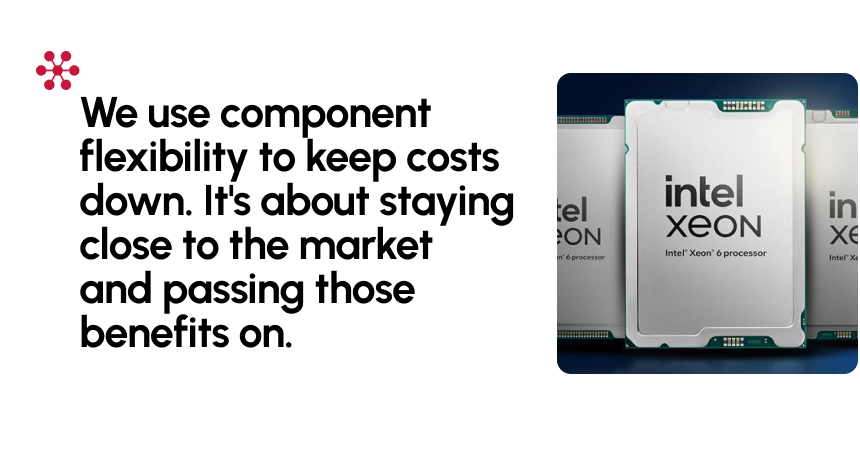
We use component flexibility to keep costs down
Exact part numbers don't always align with availability.
When specific components are scarce, we don't default to inflated pricing or long lead times. We review where compatible alternatives or upgraded components work without compromising performance.
That might mean:
- Higher-capacity DIMMs where smaller modules are tight
- Newer or higher-spec CPUs when they're more available
- Faster storage where it's better priced than older equivalents
Result: pricing stays competitive even when supply shifts - and you get configurations that actually make sense operationally.
Support lifecycle affects value (obviously)
Hardware approaching end of vendor support or already running on third-party support doesn't hold the same value as current-generation kit.
We factor that into pricing - so you're not paying inflated prices tied to original list costs for equipment that's realistically being deployed for extension projects or spares.
We follow search behaviour, not marketing cycles
Buying patterns don't always match vendor roadmaps. We track Google search trends, AI-assisted search behaviour and repeated enquiry patterns to align pricing with what you're actively trying to source - whether that's extending existing estates, replacing failed components or avoiding premature refresh cycles.
We factor that into pricing - so you're not paying inflated prices tied to original list costs for equipment that's realistically being deployed for extension projects or spares.
Competitor pricing keeps us honest
We regularly review like-for-like configurations across competitor sites, where pricing has moved, and where headline prices don't reflect full spec or warranty.
Our pricing needs to stand up when compared properly - not just at first glance. This runs continuously All of this feeds into an ongoing review cycle.
Which means:
- Website pricing stays current
- Better deals surface as conditions shift
- You see meaningful updates when you check back
Competitive pricing isn't about one-off discounts. It's about staying close to the market and passing those benefits on.
What it means for you
You get pricing that reflects today's market. Better value as availability and demand shift. And confidence that prices are being actively managed, not left to drift.
If you're buying refurbished enterprise IT on tight budgets with stretched kit, this matters.